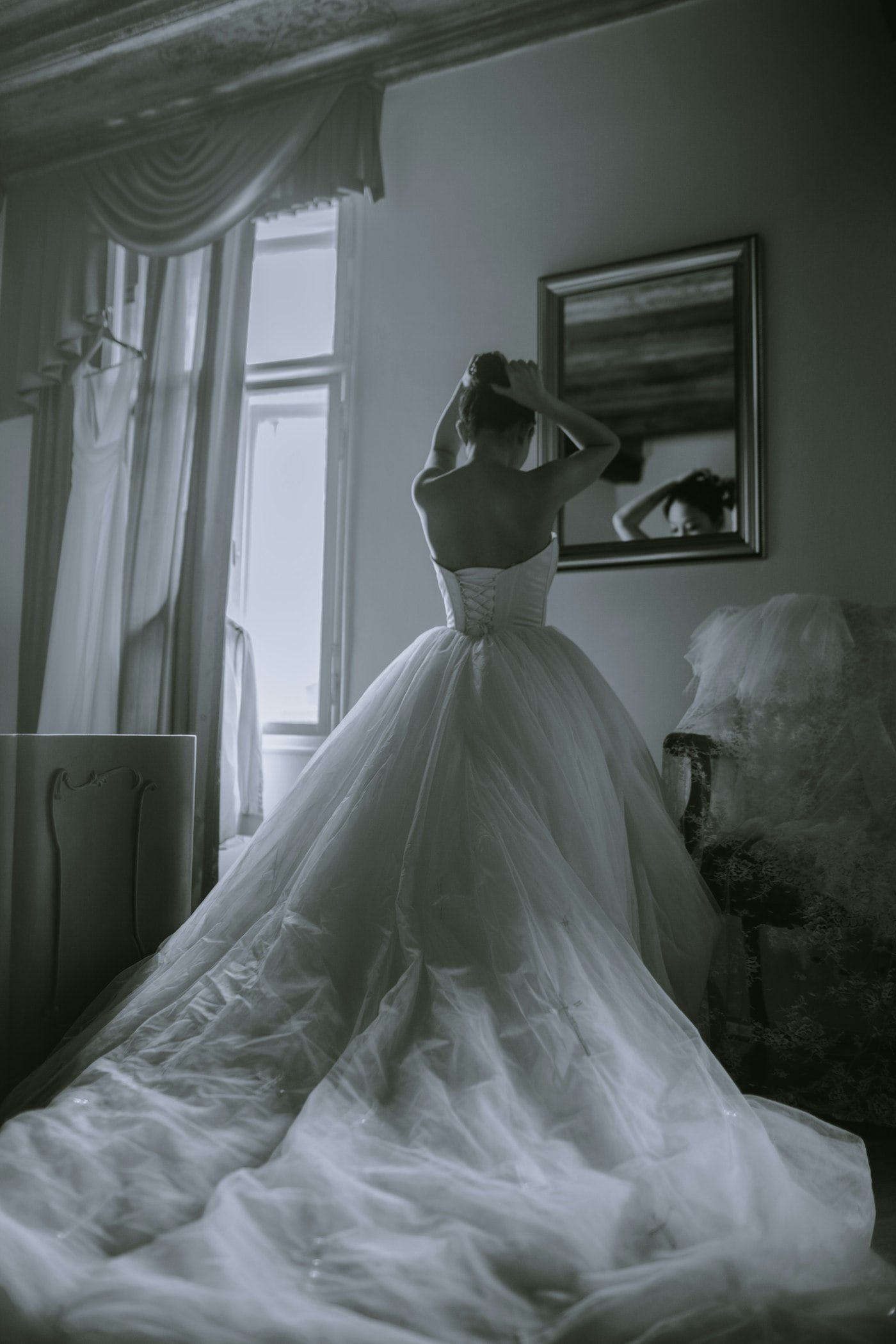
Bring the same foundation garments
Wear or bring the bra, shapewear, slip, petticoat, or other foundation layer you expect to use. A change in cup shape, waistband height, or padding can alter the bodice enough to make an otherwise correct fitting misleading. Choose thin, seamless pieces unless the design requires something specific.
Bring the actual shoes—or an exact height
Heel height decides hem length and changes posture. Bring the intended pair as early as the studio asks. If it has not arrived, bring a stable shoe at exactly the same height and switch to the real pair before the final hem is closed.
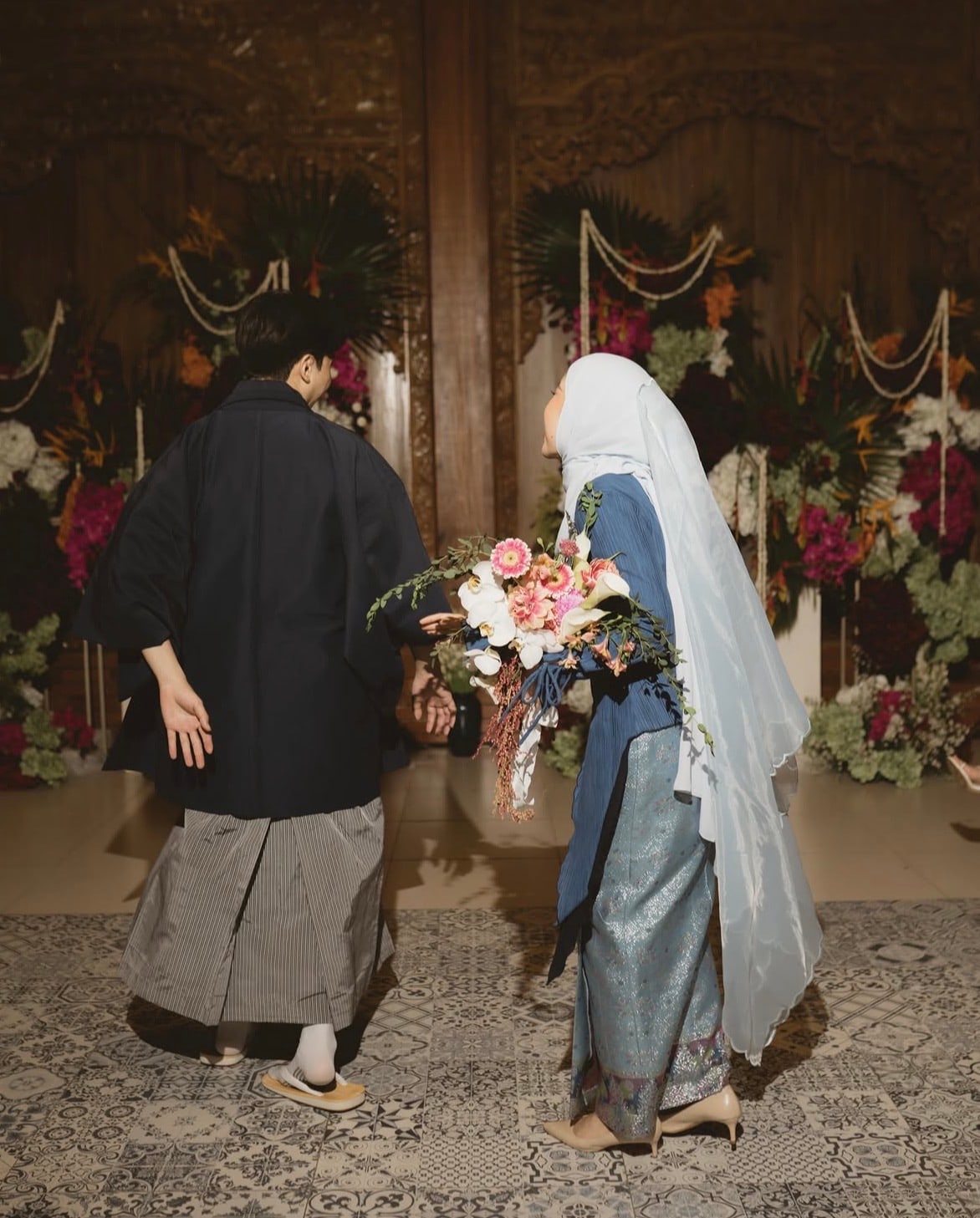
Collect the accessories that touch the fit
A veil affects the neckline and the visual weight of the back. Jewellery can meet lace or a collar. Gloves, sleeves, a belt, an overskirt, or a family textile may change where details need to stop. Bring these once the main fit is stable so the complete look can be read together.
Move through the real actions
- Sit upright, lean forward slightly, and stand without pulling at the bodice.
- Take a full stride and climb a step if the venue has stairs.
- Raise your arms to greet someone and reach forward as if receiving a bouquet.
- Walk, turn, and stop while someone watches the side seams and back hem.
- Try the bustle or train loop yourself, then ask the person helping you to repeat it.
Say what you feel in concrete terms: pressure under the arm, movement at the waist, weight pulling from one shoulder, or a hem catching the shoe. Specific observations let the maker trace the cause. A general sense that something feels wrong is still worth saying, but take a moment to locate it together.
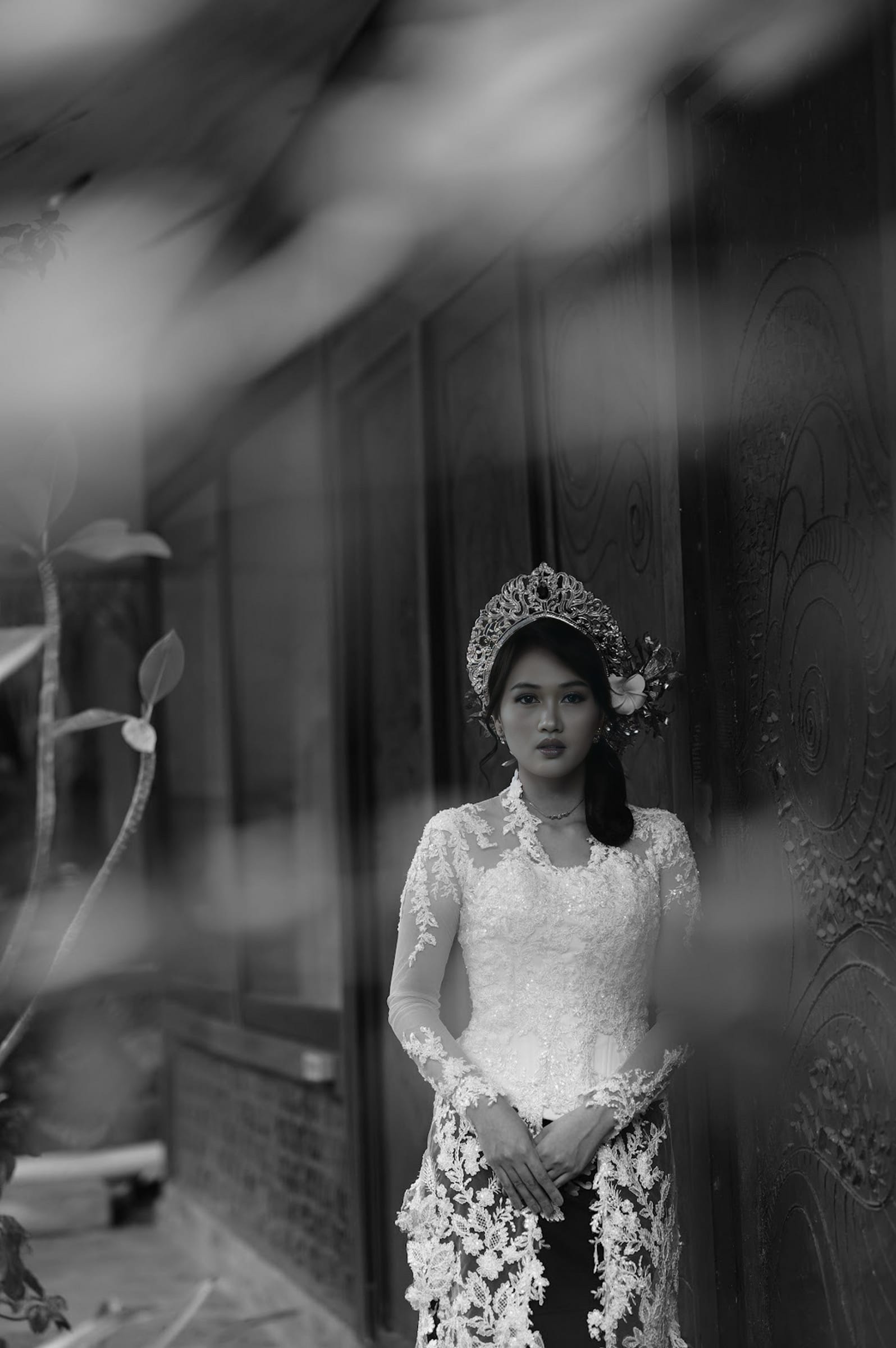
Bring one useful person, when useful
Early construction fittings are usually clearest with fewer voices in the room. For a later fitting, bring the person who will help you dress or manage the train. They can learn the closures and take a short video of any sequence they need to repeat. Choose someone who can observe calmly and keep your priorities in view.
Keep notes short and decisions clear
Photograph details only with the studio's permission, and write down decisions before leaving: neckline adjusted, sleeve length held, bustle position approved. If you notice something later, send one clear message rather than several evolving versions. It gives the atelier one reliable list to work from.
The checklist
- Intended foundation garments
- Wedding shoes or an exact heel-height substitute
- Accessories requested for that fitting
- Hair tie and minimal makeup that will not mark the garment
- A short list of movements required by the venue or ceremony
- The person responsible for dressing or the train, when requested
Arrive on time, avoid applying body lotion immediately beforehand, and mention any measurement or health change before the fitting begins. The goal is not to look finished at every visit. It is to give the maker accurate information while there is still time to use it.