
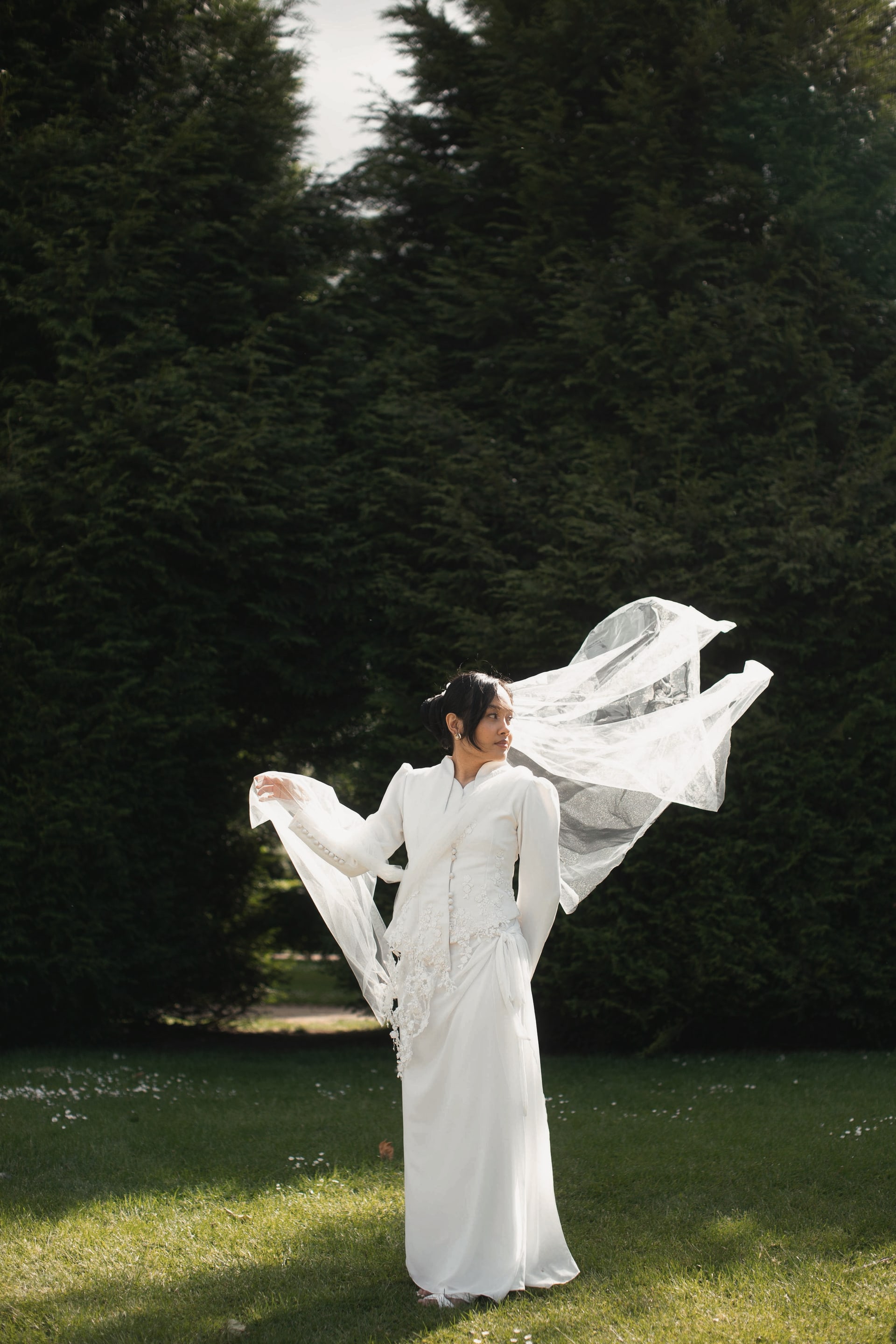
Begin with the venue, not a fabric name
A garden in Jakarta, a beach in Bali, and a cool hillside venue are all outdoors, but they create different problems. Ask where you will dress, how far you will walk, whether the ceremony is shaded, and what the ground is like. A long fine hem behaves differently on paving, grass, sand, and wet stone.
Also note the hours you will actually wear the piece. A fabric that feels pleasant for a ten-minute appointment can become heavy once it has a lining, internal structure, embroidery, and a train. Judge the whole construction rather than the top layer alone.
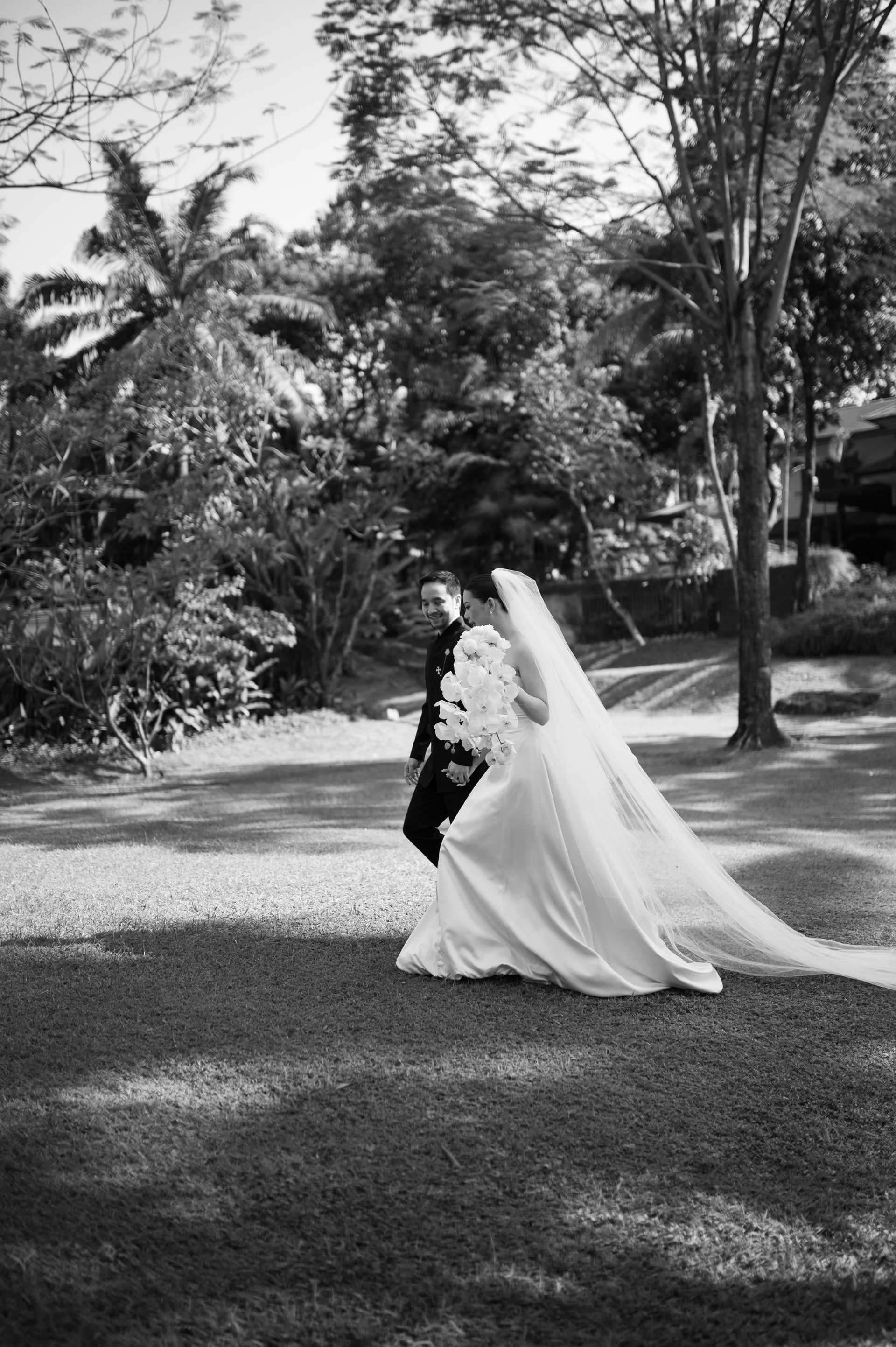
Read weight and drape together
Chiffon and fine tulle can move easily and add little visual weight, but they need a stable layer beneath them. Organza holds a cleaner volume and catches light, though a very crisp version may feel busy in strong wind. Crepe falls closer to the body and travels well, while satin gives a continuous surface that makes every seam and pull more visible.
Natural fibres are often described as the automatic answer for heat. Fibre content matters, but weave, thickness, lining, and construction matter just as much. A tightly built silk gown with several foundation layers may feel warmer than a carefully lined blend. Hold the complete stack of materials against the body before deciding.
Make room for air without losing support
- Use breathable lining wherever it will sit directly against the skin.
- Keep boning and internal support only where the silhouette needs it.
- Test whether sleeves, armholes, and a high neckline still allow a full reach.
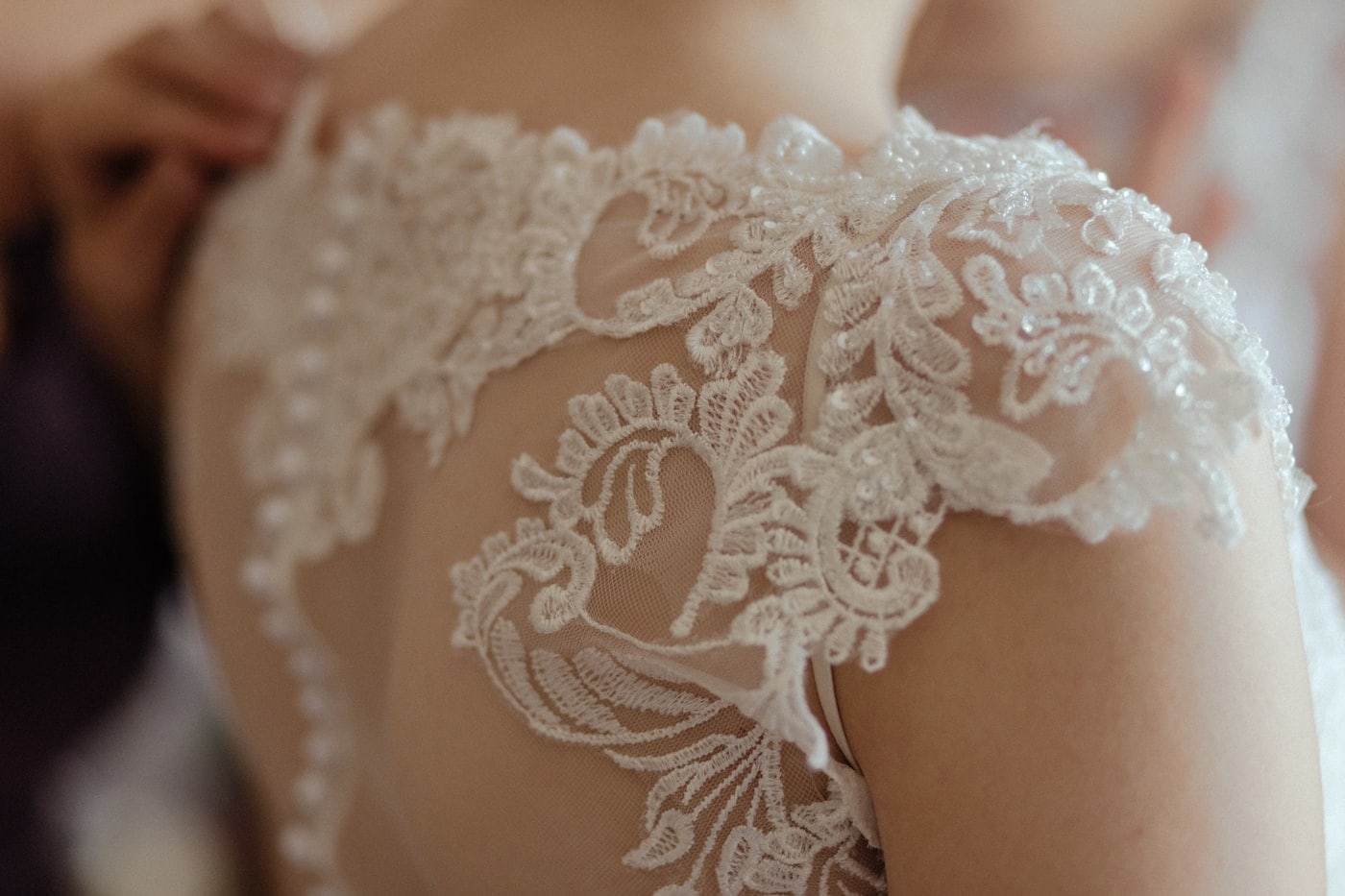
- Place dense beadwork selectively; its weight and backing can hold heat.
- Plan a bustle, wrist loop, or removable train before the first fitting if the ground is uneven.
Test movement in conditions that resemble the day
During a fitting, do more than stand in front of the mirror. Sit for several minutes, take a long stride, lift both arms, and walk while someone watches the back hem. If you plan to wear a veil, overskirt, or detachable sleeve, test the layers together. The piece should still make sense when the air moves and your hands are occupied.
Bring the likely shoes and foundation garments early. Heel height changes where weight meets the floor, and the wrong undergarment can make a breathable bodice feel restricted. These are small decisions on their own, but outdoors they compound quickly.
The shortest way to decide
Choose a silhouette first, name the conditions honestly, then compare two or three fabric combinations at full thickness. Look at them in daylight, move them by hand, and hold them against the body. The right choice is the one that keeps the intended line without asking you to manage the dress all day.